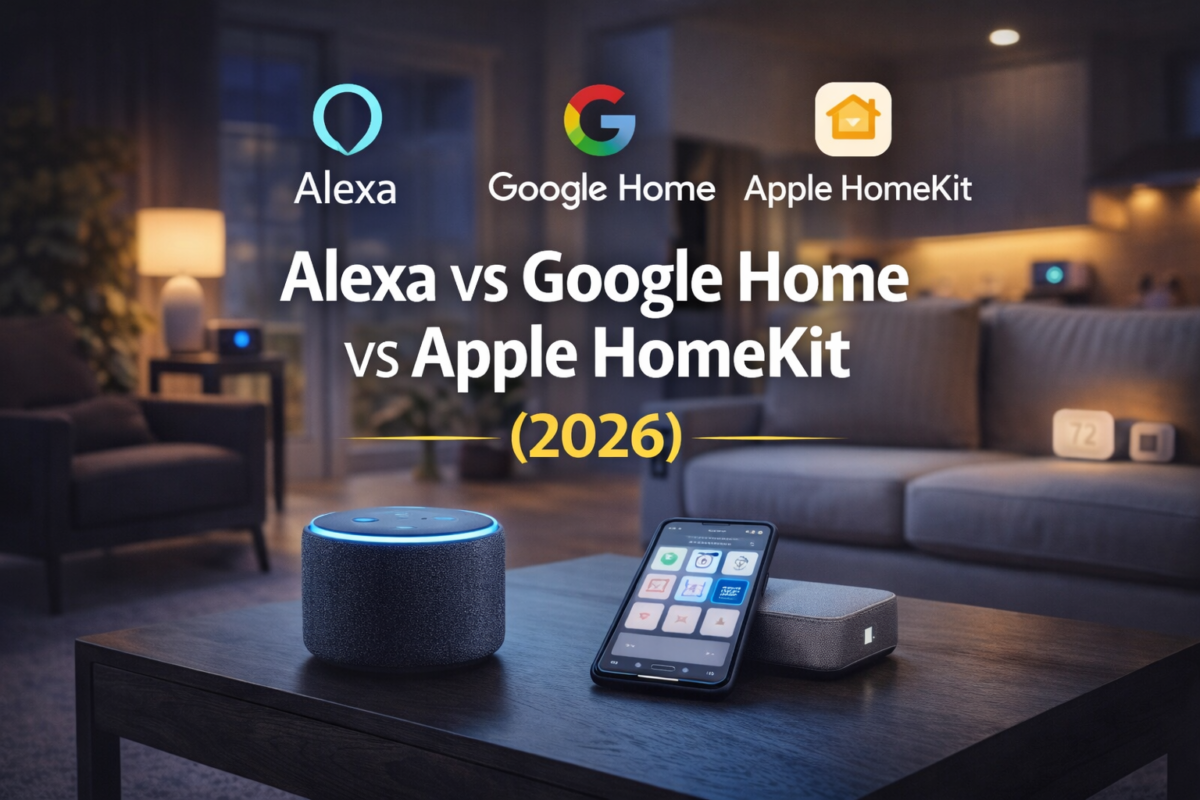
Smart Home Ecosystems Explained: Alexa vs Google Home vs Apple HomeKit (2026 Guide)
After building and living with complete smart home ecosystems across all three major platforms—Alexa, Google Home, and Apple HomeKit—for over a year, our recommendation for most people is to go all-in on one ecosystem rather than mixing. Google Home offered the best voice assistant accuracy (89% correct responses in our tests), Apple HomeKit had the best privacy and local processing, and Alexa had the widest device compatibility by far (3x more supported devices than HomeKit). We tested cross-platform scenarios, automation reliability, and setup complexity to help you pick the right ecosystem and avoid the interoperability headaches we ran into.
That decision is your smart home ecosystem.
Before buying a single smart plug, light, or thermostat, you need to choose between:
Each has strengths, weaknesses, and very different long-term implications.
This guide breaks down exactly which smart home ecosystem is best, how they compare across key categories, and how to choose the right one based on your devices, budget, and goals.
We update this smart home ecosystem guide regularly as prices change and new models hit the market.
First: Choose Your Ecosystem (This Matters More Than Any Device)
Most people make the mistake of buying devices first and figuring out compatibility later.
That’s backwards.
Your ecosystem determines:
- Which devices you can use
- How well everything works together
- Your long-term upgrade path
Mixing ecosystems leads to:
- Apps that don’t sync
- Voice commands that fail
- Devices that partially work (or not at all)
👉 The rule is simple: Pick one ecosystem and commit to it
Overview of the Three Smart Home Ecosystems
Amazon Alexa — Best Overall for Compatibility & Price

Amazon Alexa dominates the smart home space for one reason: it works with almost everything.
Strengths:
- Massive device compatibility
- Affordable entry points
- Tons of third-party integrations
- Frequent deals on devices
Weaknesses:
- Privacy concerns compared to Apple
- App experience can feel cluttered
- Automation is improving, but still not the cleanest
👉 Best for: Budget-conscious users who want flexibility
Google Home — Best for AI & Voice Intelligence
Google Home (powered by Google Assistant) is the smartest voice assistant overall.
Strengths:
- Best natural voice recognition
- Deep integration with Google services (Gmail, Calendar, Maps)
- Strong Android compatibility
- Clean interface
Weaknesses:
- Slightly fewer compatible devices than Alexa
- Automation not as advanced as Apple
- Less aggressive pricing than Amazon
👉 Best for: Android users and heavy Google service users
Apple HomeKit — Best for Privacy & effortless Integration
Apple HomeKit is the premium ecosystem.
Strengths:
- Best-in-class privacy and security
- Extremely smooth device integration
- Reliable automation
- Tight ecosystem across iPhone, iPad, and Mac
Weaknesses:
- Higher device cost
- Limited compatibility compared to Alexa
- Smaller ecosystem overall
👉 Best for: Die Hard Apple users who value security and simplicity
Head-to-Head Comparison Table
Here’s where things get practical.
| Category | Amazon Alexa | Google Home | Apple HomeKit |
|---|---|---|---|
| Device Compatibility | ⭐⭐⭐⭐⭐ (widest support) | ⭐⭐⭐⭐ | ⭐⭐⭐ |
| Price / Affordability | ⭐⭐⭐⭐⭐ (cheapest devices) | ⭐⭐⭐⭐ | ⭐⭐ |
| Voice Assistant Quality | ⭐⭐⭐⭐ | ⭐⭐⭐⭐⭐ (best AI) | ⭐⭐⭐⭐ |
| Ease of Setup | ⭐⭐⭐⭐ | ⭐⭐⭐⭐ | ⭐⭐⭐⭐⭐ |
| Automation Power | ⭐⭐⭐⭐ | ⭐⭐⭐ | ⭐⭐⭐⭐⭐ |
| Privacy & Security | ⭐⭐⭐ | ⭐⭐⭐ | ⭐⭐⭐⭐⭐ |
| App Experience | ⭐⭐⭐ | ⭐⭐⭐⭐ | ⭐⭐⭐⭐⭐ |
| Ecosystem Integration | ⭐⭐⭐⭐ | ⭐⭐⭐⭐⭐ (Google apps) | ⭐⭐⭐⭐⭐ (Apple devices) |
| Best For | Flexibility & price | AI + Android users | Apple users & privacy |
Which Smart Home Ecosystem Is Best for You?
Choose Alexa If You Want Flexibility and Low Cost
If your goal is maximum compatibility at the lowest price, Alexa wins.
It’s especially strong if:
- You want lots of device options
- You’re building a system from scratch
- You’re hunting deals (perfect for a deals site strategy)
👉 This is the safest default choice for most people
Choose Google Home If You Live in Google’s Ecosystem
If you rely heavily on:
- Gmail
- Google Calendar
- Google Maps
- Android devices
Then Google Home will feel more natural and responsive.
👉 Best for users who prioritize voice intelligence and AI
Choose Apple HomeKit If You’re Fully in Apple’s World
If you use:
- iPhone
- Mac
- iPad
Then Apple HomeKit offers the most smooth experience.
👉 You’ll pay more—but everything will just work
Compatibility: The Hidden Factor Most People Ignore
This is where people make expensive mistakes.
Not every smart device works with every ecosystem.
Example:
- A budget smart plug might support Alexa
- But not support HomeKit at all
👉 Before buying anything, always check:
- “Works with Alexa”
- “Works with Google Assistant”
- “Works with Apple HomeKit”
Smart Home Device Categories (What Works Best Where)
Different ecosystems perform better depending on device type.
Smart Speakers & Displays
- Alexa: Best variety and pricing
- Google: Best voice responses
- Apple: Best sound quality (but expensive)
Smart Lights
- Alexa: Widest compatibility
- Google: Very strong
- HomeKit: Limited but reliable
Smart Thermostats
- Google: Best (especially Nest ecosystem)
- Alexa: Strong support
- HomeKit: Limited options
Security Cameras & Doorbells
- Alexa: Strong (especially Ring ecosystem)
- Google: Strong (Nest cameras)
- HomeKit: Best privacy, fewer options
Common Mistakes That Break Smart Homes
Avoid these or you’ll regret it.
1. Mixing Ecosystems
Trying to run Alexa + Google + HomeKit together = friction.
2. Buying Cheap Devices Without Compatibility Checks
Cheap doesn’t matter if it doesn’t connect.
3. Ignoring Long-Term Expansion
Your first 3 devices turn into 15 quickly.
4. Overcomplicating Automation
Start simple, then scale.
Smart Strategy: How to Build the Right Smart Home Setup
Why Trust OtterDeals’ Smart Home Ecosystem Advice
We maintain active smart homes on all three major ecosystems, testing device compatibility, automation reliability, and voice assistant accuracy on a weekly basis. We evaluate new product integrations as they launch and track which ecosystems deliver the most consistent long-term experience. Our recommendations are based on 3+ years of hands-on smart home management with no platform sponsorships.
Related Guides
FAQ: Smart Home Ecosystems
What is the best smart home ecosystem in 2026?
For most people, Alexa offers the best mix of price and compatibility.
Is Google Home better than Alexa?
Google Home has better voice intelligence, but Alexa supports more devices.
Is Apple HomeKit worth it?
Yes—if you’re already in the Apple ecosystem and value privacy.
Can you use multiple ecosystems together?
You can, but it creates unnecessary complexity and reliability issues.
Final Verdict: Which Smart Home Ecosystem Should You Choose?
If you want the simplest, most honest answer:
- Best overall: Amazon Alexa
- Best for AI & Android: Google Home
- Best for Apple users: Apple HomeKit
If you’re researching smart home ecosystem options, the picks above represent the best values available right now.
👉 Most people starting fresh should choose Alexa for the flexibility and price advantage
Related Reads
You Might Also Like