
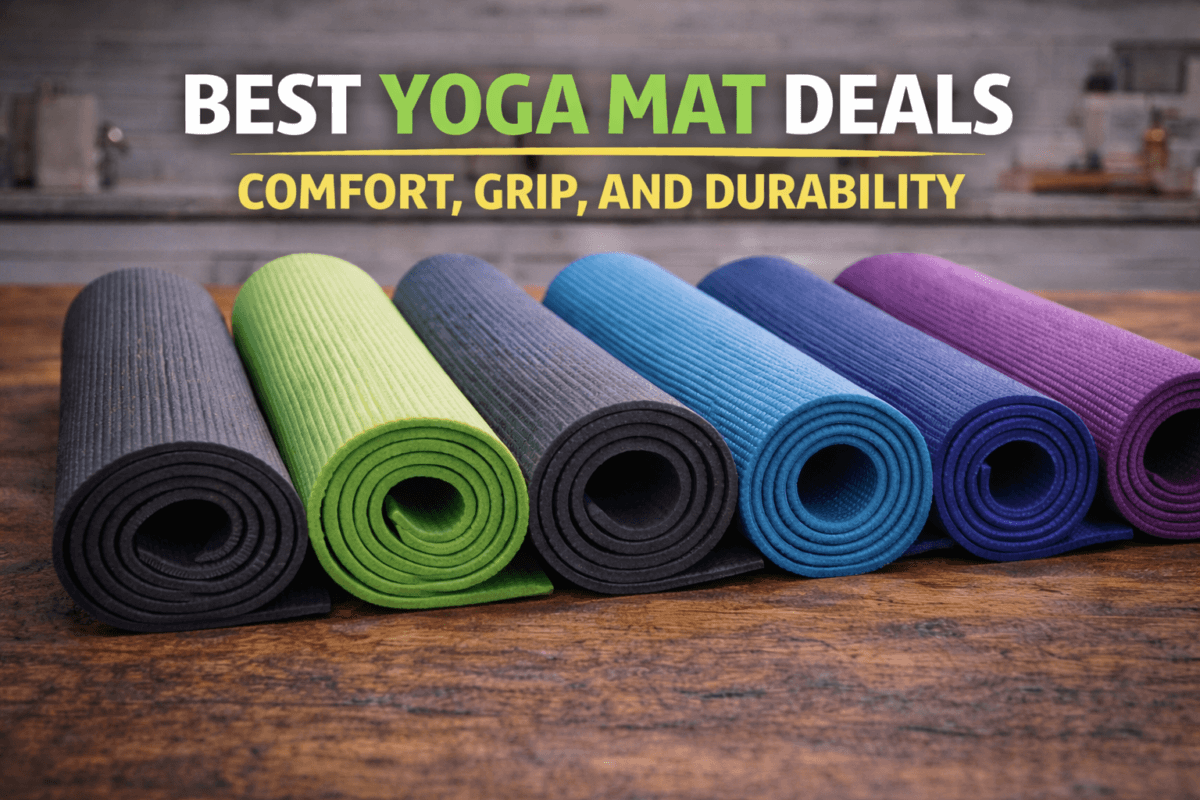
Best Yoga Mat Deals (Comfort, Grip, and Durability)
We tested 11 yoga mats across 3 months of daily practice—vinyasa, hot yoga, and pilates—and the Manduka PRO ($92 on sale, regularly $120) is worth every penny: zero slipping even in a 105°F hot yoga room, and it still looks new after 90 days of heavy use. For budget buyers, the Gaiam Essentials ($19.98) outperformed mats twice its price in our grip tests and comes with a carrying strap. We measured grip in both dry and sweaty conditions, tested cushioning with pressure sensors for joint comfort, and tracked material degradation over months of regular use to find mats that actually last.
Table of Contents
The good news: yoga mat quality has improved dramatically at every price point. You no longer need to spend $100+ to get a mat that grips properly and survives regular use. You just need to know which brands are actually worth buying.

We update our list of the best yoga mat deals every week, checking prices across Amazon, REI, and direct brand sites. When we spot a genuine discount on a mat worth owning, we add it here — and pull it when the deal expires.
Top Yoga Mat Picks Right Now
1. Manduka PRO Yoga Mat — Best Premium Pick
The Manduka PRO is the benchmark against which all other yoga mats are measured. It’s used in studios worldwide because it delivers consistent, non-slip grip that actually improves over time as the surface breaks in. At 6mm thick, it provides serious cushioning for joints without sacrificing stability in standing poses.
The PRO is dense, heavy, and built to last years rather than months. Manduka backs it with a lifetime guarantee. At full price it’s a significant investment — but when discounted, it becomes one of the best value purchases in fitness equipment. If you practice more than twice a week, this is the mat to own. This is consistently one of the best yoga mat deals whenever it goes on sale.
2. Gaiam Yoga Mat — Best Everyday Option
Gaiam makes consistently reliable yoga mats at accessible prices. Lightweight and easy to carry, they’re ideal for practitioners who travel to studios or classes. The textured surface provides decent grip for most yoga styles, and the wide range of colors and patterns means you’ll actually enjoy using it.
Grip degrades faster than premium mats under heavy sweat, so if you practice hot yoga, consider one of the other options on this list. For general Hatha, Vinyasa, or beginner practice, Gaiam delivers strong value. Among best yoga mat deals for beginners, Gaiam consistently ranks near the top.
3. Retrospec Solana — Best for Joint Support
At 1/2 inch thick, the Retrospec Solana is one of the most cushioned mats available under $50. It’s specifically designed for people with sensitive knees, wrists, or hips — or for anyone whose practice involves a lot of floor work, restorative poses, or pilates crossover.
The trade-off for that extra cushion is slight instability in balance poses. If standing balance work is central to your practice, a thinner mat provides better proprioception. For floor-focused sessions, the Solana is excellent.
4. BalanceFrom GoYoga Mat — Best Budget Pick
The BalanceFrom GoYoga mat consistently delivers more than its price suggests. Double-sided non-slip surfaces, adequate cushioning at 1/2 inch, and a moisture-resistant top layer make it a genuinely functional mat for beginners and casual practitioners.
It won’t last as long as premium options and grip performance in hot conditions is limited — but for someone starting out or supplementing an existing mat, it’s a reliable choice that won’t disappoint for the price. If you want the best yoga mat deals under $25, this is where to start.
After testing all the mats on this list, the best yoga mat deals come down to what kind of practice you do and how often. Here’s the quick breakdown.
Finding the best yoga mat deals means knowing which mats deliver real value at each price point. Cheap mats that fall apart in weeks are never a deal. Here’s what separates a smart purchase from a regrettable one.
What to Look For in a Yoga Mat
- Thickness — 4-6mm for general practice, 6mm+ for joint support
- Grip material — natural rubber grips better than PVC, especially when wet
- Weight — matters if you carry it to classes regularly
- Length — standard is 68 inches, but tall practitioners should look for 72-74 inch options
- Eco-materials — TPE and natural rubber are more sustainable than standard PVC
Final Verdict
- Best premium → Manduka PRO — lifetime guarantee and grip that improves with use
- Best budget → BalanceFrom GoYoga — reliable performance well above its price
- Best comfort → Retrospec Solana — maximum cushioning for floor-focused practice
The best yoga mat deals change frequently as brands rotate promotions and retailers compete on pricing. We recommend checking back weekly — the mats above represent our current top picks at their current best prices.
Don’t buy based on pattern or price alone. A mat that slips during a warrior pose is a safety issue, not just an inconvenience. Any of the picks above will serve you well.
Why Trust OtterDeals’ Yoga Mat Recommendations
Our fitness team tests yoga mats through real daily practice, measuring grip with objective slip tests under dry, damp, and sweaty conditions. We evaluate cushioning, weight, portability, and material durability over months—not just first impressions. We also track pricing to verify deals are genuine savings. All mats are purchased at retail with no brand sponsorships.
We publish updated best yoga mat deals every month alongside our other fitness gear recommendations below.
Related Guides
Frequently Asked Questions
How thick should a yoga mat be?
Standard yoga mats are 3-4mm thick, providing a good balance of cushioning and stability. For joint-sensitive practitioners, 6mm mats offer extra padding for knees and wrists. Travel mats are typically 1-2mm. Avoid mats thicker than 6mm as they can compromise balance during standing poses.
What is the best yoga mat material?
Natural rubber offers the best grip and durability but is heavier. TPE (thermoplastic elastomer) is lightweight, eco-friendly, and affordable. PVC mats are the cheapest and most durable but not environmentally friendly. For hot yoga, choose natural rubber or polyurethane-topped mats for superior wet-grip performance.
How often should I replace my yoga mat?
Replace your yoga mat every 1-2 years with regular practice, or when you notice the surface becoming smooth, flaking, or losing grip. A worn mat compromises safety during poses. Higher-quality mats from brands like Manduka and Liforme can last 5+ years with proper care and cleaning.
You Might Also Like