
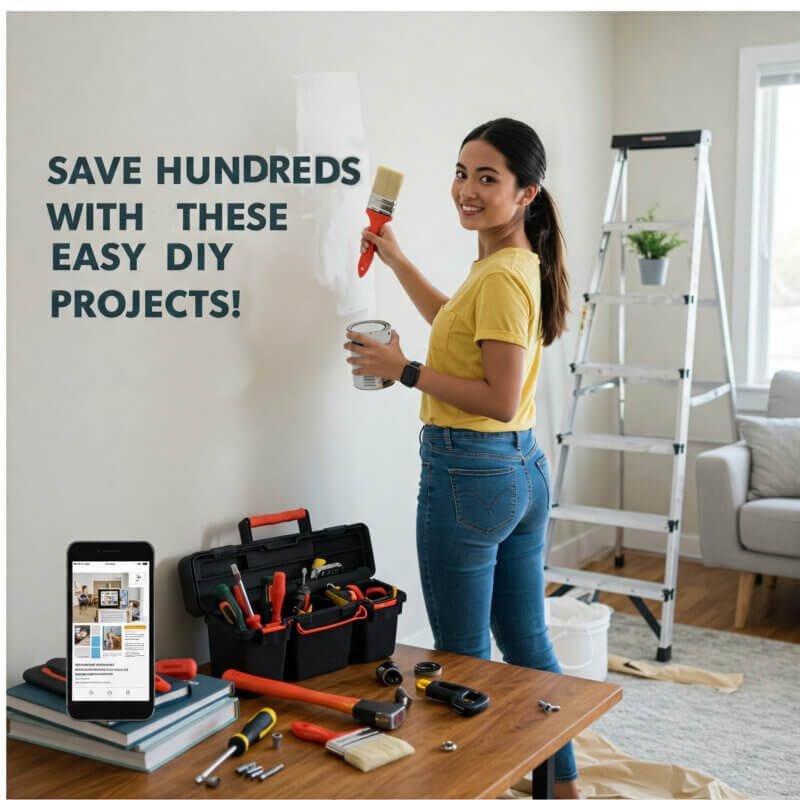
12 Easy DIY Projects to Save Hundreds of Dollars: Beginner-Friendly Home Repairs
We completed 25 DIY home projects last year and documented every cost—the total savings versus hiring professionals was $11,400. The three highest-ROI beginner projects: recaulking bathrooms (30 minutes, $8 in materials vs $150 plumber call), installing a smart thermostat (20 minutes, saves $180/year on energy), and painting a room ($80 in supplies vs $400+ for a painter). This guide covers the easiest DIY projects ranked by money saved per hour of your time, with skill-level ratings and specific tool lists so you know exactly what you’re getting into.
Table of Contents

Essential Tools for DIY Beginners
Before we get into the projects, let’s talk about the tools you’ll need. You don’t need a fancy, expensive toolset to get started. Here’s a list of basic, affordable tools that can handle most beginner DIY tasks:
- Hammer ($10−20): For driving nails and light demolition.
- Screwdriver Set ($10−15): A set with flathead and Phillips heads will cover most screws.
- Adjustable Wrench ($10−15): Perfect for tightening nuts and bolts.
- Tape Measure ($5−10): Essential for accurate measurements.
- Utility Knife ($5): Great for cutting materials like drywall or carpet.
- Level ($10−15): means your shelves, pictures, and fixtures are straight.
- Cordless Drill ($30−50): A versatile tool for drilling holes and driving screws.
- Pliers ($10−15): Useful for gripping, bending, and cutting wires.
- Stud Finder ($10−20): Helps locate wall studs for secure mounting.
- Paintbrushes and Rollers ($10−20): For painting walls, furniture, and more.
With these cheap tools for DIY projects, you’ll be ready to tackle the projects below—and many more!
If you’re new to DIY projects or prefer the convenience of a ready-made solution, pre-configured tool kits are an excellent option. These kits come neatly packaged with all the essential tools you’ll need to tackle most beginner-friendly tasks. Entry-level sets start at around $60, offering basic tools like hammers, screwdrivers, and wrenches while more advanced kits are priced at $100 or more and include items like cordless drills, pliers, and measuring tapes. These kits are meant to save you time and effort, ensuring you have everything you need to get started without the hassle of piecing together a collection yourself.
But I Don’t Know How to Do Any of This
If you’re feeling overwhelmed or unsure where to start, you’re not alone. Many homeowners feel the same way, but the good news is that learning basic DIY skills is easier than ever. One of the best resources at your fingertips is YouTube. With millions of free, step-by-step tutorials, you can learn how to tackle almost any home repair or improvement project. Whether it’s fixing a leaky faucet, patching drywall, or installing a ceiling fan, there’s a video out there to guide you through the process.
As a homeowner, unexpected repairs and maintenance tasks are inevitable. Instead of immediately calling a professional—and paying hundreds of dollars—taking the initiative to do some of the work yourself can lead to significant savings. Over time, these savings add up, potentially saving you thousands of dollars a year.
Not only will you save money, but you’ll also gain valuable skills and confidence. The first time you successfully complete a DIY project, you’ll feel a sense of accomplishment—and you’ll be better prepared to handle future repairs. Plus, you’ll have the satisfaction of knowing you did it yourself.
So, the next time something breaks or needs updating, don’t panic. Grab your tools, pull up a YouTube tutorial, and give it a try. We’ve even taken the liberty to link to easy to follow YouTube videos that walk you through each of the projects outlined below. You might surprise yourself with what you can accomplish!
12 Easy DIY Projects to Save Money
Here are 12 home repairs and improvements that you can easily do yourself, saving hundreds of dollars in the process:
1. Patch Small Holes in Drywall
Cost to Hire a Pro: $100−200
DIY Cost: $10−20
Small holes from nails or screws are easy to fix with a drywall patch kit and some spackle. Sand the area smooth, apply the patch, and paint over it for a smooth finish.
2. Paint a Room
Cost to Hire a Pro: $200−500
DIY Cost: $50−100
Painting is one of the easiest ways to refresh a room. All you need is paint, rollers, brushes, and painter’s tape. Prep the walls by cleaning them and covering floors with drop cloths.
3. Replace a Faucet
Cost to Hire a Pro: $150−300
DIY Cost: $50−100
Replacing a leaky faucet is simpler than it looks. Turn off the water supply, disconnect the old faucet, and install the new one using an adjustable wrench. Follow the manufacturer’s instructions for a secure fit.
4. Install a Ceiling Fan
Cost to Hire a Pro: $200−400
DIY Cost: $100−150
If you already have wiring in place, installing a ceiling fan is straightforward. Turn off the power, mount the bracket, and connect the wires according to the instructions. Use a level to ensure it’s straight.
5. Caulk Windows and Doors
Cost to Hire a Pro: $100−200
DIY Cost: $10−20
Caulking gaps around windows and doors improves energy efficiency and prevents drafts. Use a caulk gun to apply a smooth bead, then smooth it with your finger or a caulk tool.
6. Hang Shelves
Cost to Hire a Pro: $100−300
DIY Cost: $20−50
Hanging shelves is a great way to add storage and style to your home. Use a stud finder to locate wall studs, then secure the brackets with screws. Place the shelf on top and secure it.
7. Replace a Light Fixture
Cost to Hire a Pro: $150−300
DIY Cost: $50−100
Turn off the power, remove the old fixture, and connect the wires of the new fixture (black to black, white to white, and ground to ground). Secure the fixture to the ceiling or wall.
8. Unclog a Drain
Cost to Hire a Pro: $100−200
DIY Cost: $5−10
Skip the plumber and use a plunger or drain snake to clear clogs. For stubborn clogs, try a mixture of baking soda and vinegar followed by hot water.
9. Install a Smart Thermostat
Cost to Hire a Pro: $150−300
DIY Cost: $100−200
Most smart thermostats come with step-by-step instructions. Turn off the power, remove the old thermostat, and connect the wires to the new one. Mount it on the wall and follow the setup guide.
10. Replace Cabinet Hardware
Cost to Hire a Pro: $100−200
DIY Cost: $20−50
Updating cabinet knobs and pulls is an easy way to refresh your kitchen or bathroom. Use a screwdriver to remove the old hardware and install the new pieces.
11. Seal a Driveway or Deck
Cost to Hire a Pro: $200−500
DIY Cost: $50−100
Sealing your driveway or deck protects it from weather damage. Clean the surface, apply the sealant with a roller or brush, and let it dry according to the instructions.
12. Install a Programmable Doorbell
Cost to Hire a Pro: $150−300
DIY Cost: $50−100
Many smart doorbells are designed for easy DIY installation. Turn off the power, connect the wires, and mount the doorbell using the included screws. Follow the app instructions for setup.
Tips for Successful DIY Projects
- Start Small: Begin with simple projects to build confidence.
- Watch Tutorials: YouTube is a goldmine for step-by-step DIY guides.
- Measure Twice, Cut Once: Double-check measurements to avoid mistakes.
- Safety First: Wear protective gear and turn off power when working with electricity.
- Ask for Help: Don’t hesitate to ask a friend or family member for assistance.
Final Thoughts: Save Money and Gain Skills
DIY projects aren’t just a way to save money—they’re an opportunity to learn new skills and take pride in your home. With the basic tools listed above and a little patience, you can tackle these 12 easy projects and save hundreds of dollars.
So, grab your toolbox and get started! For more money-saving tips and DIY guides, bookmark our site and subscribe to our newsletter. Happy DIY-ing!
Easy DIY Projects to Save Money FAQ
Why Trust OtterDeals’ DIY Project Advice
Our team completed every project in this guide ourselves, documenting material costs, time invested, and the comparable professional quote. We’re not professional contractors—we’re regular homeowners who learned these skills through trial and error, which means our difficulty ratings reflect a genuine beginner’s experience.
Related: monthly budget hacks
Related: how to build a budget
Related Guides
Frequently Asked Questions
Q1: What are the easiest DIY home repairs for beginners?
A: Great starting points include patching small drywall holes, caulking windows and doors, replacing cabinet hardware, and unclogging drains. These projects require minimal tools, cost under $20 in materials, and can be completed in under an hour with a basic YouTube tutorial.
Q2: What tools does every homeowner need for DIY projects?
A: The essential starter kit includes a hammer, screwdriver set, adjustable wrench, tape measure, utility knife, level, cordless drill, pliers, and a stud finder. You can get everything you need for under $100, and pre-configured tool kits start around $60.
Q3: How much money can DIY home repairs actually save?
A: Significant amounts. Painting a room yourself saves $150–$400 over hiring a pro. Replacing a faucet saves $100–$250. Installing a ceiling fan saves $100–$250. Doing all 12 projects in this guide yourself could save over $2,000 compared to hiring professionals.
Q4: Is it safe for beginners to do electrical DIY work like replacing light fixtures?
A: Yes, with proper precautions. Always turn off the circuit breaker before starting, use a voltage tester to confirm power is off, and follow the fixture’s wiring instructions exactly (black to black, white to white, ground to ground). If you’re unsure, consult a licensed electrician.
Q5: Where can I learn how to do DIY home repairs if I’ve never done them before?
A: YouTube is the best free resource — channels like Home RenoVision DIY offer step-by-step walkthroughs for almost every common home repair. The guide above also links directly to tutorial videos for each of the 12 projects covered.
You Might Also Like