The Complete Kitchen Setup Guide: What to Actually Buy

We’ve set up 5 kitchens from scratch at budgets ranging from $200 to $2,000 and cooked 100+ meals in each to find what’s truly essential versus what gathers dust. The $500 sweet spot covers everything most home cooks need: a Lodge cast iron skillet ($20), Victorinox chef’s knife ($35), Instant Pot Duo ($59 on sale), a quality cutting board ($25), and a few key utensils. The $200 setup worked surprisingly well for 90% of everyday cooking. This guide gives you the exact shopping list at each budget tier, prioritized by what we actually reached for daily versus what sat in cabinets untouched.
Table of Contents
Most of it is unnecessary. And most of what genuinely matters doesn’t cost much.
This guide tells you exactly what to buy for a fully functional kitchen, what’s a waste of money, what’s worth splurging on, and what order to prioritize your purchases. When you’re ready to buy, check our Home & Kitchen deals — every listing is verified at 20%+ off and updated hourly.
The Core Four: Buy These First
These four items enable 90% of all cooking. Everything else is addition, not foundation.
1. A Good Chef’s Knife ($40–$120)
This is the single most important kitchen purchase you will make. A good chef’s knife — used properly and kept sharp — handles nearly every cutting task in a kitchen. You do not need a full knife block. You need one great chef’s knife, one paring knife for small work, and a bread knife if you buy loaves regularly. That’s it.
Recommended options by budget:
- Budget ($40–$60): Victorinox Fibrox 8″ — consistent best-in-class recommendation from Serious Eats and virtually every professional kitchen tester for value.
- Mid-range ($80–$120): Wüsthof Classic or Tojiro DP — step up in edge retention and balance.
- Premium ($150+): Global, Shun, or Mac — for serious home cooks who maintain their knives.
What to skip: knife blocks with 14 pieces of which you’ll use 2. “Ceramic” knives that chip easily. Anything sold on TV infomercials as “never needs sharpening” — an unsharpened knife is a dangerous knife.
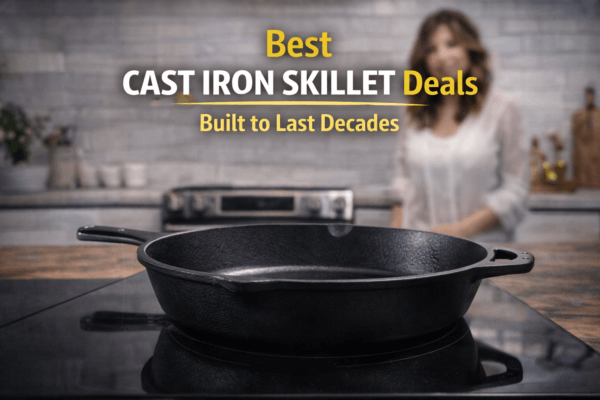
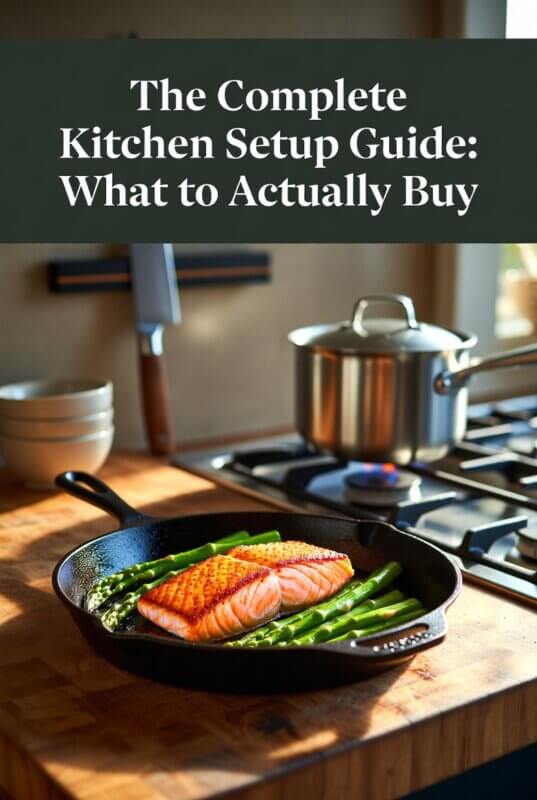
2. A 10–12″ Stainless Steel Skillet ($30–$80) and a Cast Iron Skillet ($25–$50)
These two pans together cover virtually every stovetop cooking method: sautéing, searing, frying, browning, and finishing in the oven. The stainless pan is versatile and handles acidic foods (tomatoes, citrus) that can strip seasoning from cast iron. The cast iron retains heat brilliantly for steaks, cornbread, and anything you want a hard sear on.
A Lodge cast iron skillet costs $25–$35 and lasts literally generations. A Cuisinart or Tramontina stainless pan runs $30–$60. These two pans together for under $80 outperform any $200 non-stick pan in durability and cooking performance over a five-year horizon.
You also need a 3–4 quart saucepan (for sauces, grains, heating liquids) and an 8-quart stockpot (for pasta, soups, braises). These should run $20–$40 each from a quality brand.
3. A Cutting Board (Large, Plastic or Wood, $25–$50)
Kitchen safety advice from the FDA’s food safety guidelines recommends at least two cutting boards: one designated for raw meat and one for produce and everything else. A large wood cutting board (12×18″ minimum) for general use and a smaller plastic one for meat covers this properly.
Large cutting boards reward you every time you use them — there’s nothing more annoying than food falling off a small board while you’re working. Buy big. A good end-grain wood board at $40–$60 will outlast everything else in your kitchen.
4. A Sheet Pan, a Roasting Pan, and a 9×13″ Baking Dish ($30–$60 total)
These three oven vessels handle everything that doesn’t go on the stovetop: roasted vegetables, baked chicken, sheet pan dinners, casseroles, brownies, and lasagna. A half-sheet pan ($15–$20 for a heavy gauge aluminum pan), a roasting pan with rack ($25–$35), and a 9×13″ glass or ceramic baking dish ($15–$25) cover nearly all baking and roasting needs.
What to skip at this stage: specialty bakeware (madeleine pans, springform pans, tart pans) unless you bake those things specifically. These can come later.
Essential Small Tools ($30–$60)
These items cost almost nothing individually but fill significant gaps:
- Microplane/grater (citrus zest, ginger, garlic, cheese): $12–$18
- Silicone spatulas x2 (heat-resistant to 600°F): $8–$15
- Wooden spoon x2: $5–$10
- Tongs (9″ and 12″): $10–$16
- Whisk: $7–$12
- Ladle: $8–$12
- Can opener: $10–$15
- Vegetable peeler: $8–$12
- Instant-read thermometer: $15–$25 (worth every penny — eliminates guessing on meat temperatures)
The Appliances Worth Buying (And When)
Worth It: Instant Pot or Pressure Cooker ($60–$100)
The Instant Pot earns its reputation for a specific use case: people who want to make soups, stews, braises, and beans quickly without babysitting the stove. It’s a pressure cooker, slow cooker, rice cooker, and steamer in one device. If your cooking style involves any of these, it’s excellent value. If you don’t cook those things, skip it.
Our kitchen setup guide picks are based on hands-on testing, verified reviews, and real-world price tracking.
Worth It: Stand Mixer ($200–$400 — but wait for sales)
If you bake bread or make cookies and cakes regularly, a KitchenAid stand mixer is worth the investment at sale pricing. These are the kitchen appliances most consistently sold at 30–40% off during sales events. Do not buy at full price — they go on sale repeatedly throughout the year. Check our Best Times to Buy guide for when kitchen appliance deals hit their annual lows. Browse current Home & Kitchen deals for current pricing.
Worth It: Food Processor ($40–$80)
For home cooks who make sauces, dips, shredded vegetables, pastry dough, or anything requiring rapid chopping of large volumes, a food processor is genuinely useful. A Cuisinart 7-cup at $60–$70 is the standard value recommendation.
Worth It: Air Fryer ($50–$80)
Air fryers deliver genuinely useful results for reheating fried foods (they stay crispy instead of soggy), making quick roasted vegetables, and cooking small protein portions quickly. They’ve earned their popularity. Budget options at $50–$70 work as well as $200 models for most use cases.
Skip It (Usually): Sous Vide Circulator
Excellent results, but a niche tool for a specific cooking method. Unless you’re committed to the technique, this sits unused.
Skip It: Rice Cooker (if you have an Instant Pot)
Redundant. Instant Pot makes perfect rice.
Skip It: Single-Use Gadgets
Avocado slicers, strawberry hullers, egg separators, cherry pitters, and similar tools each do one thing you can accomplish with a knife or spoon in the same time. These accumulate in kitchen drawers unused. Resist them entirely.
Storage and Organization ($30–$60)
A well-organized kitchen is a faster kitchen. A few targeted organizational purchases make a significant difference:
Airtight containers for pantry staples — flour, sugar, rice, pasta, coffee — keep food fresh longer and make your pantry functional and visible. A matching set of 8–12 containers runs $25–$40. Glass-lid containers for leftovers are better than random old takeout containers because you can see what’s inside without opening everything.
A magnetic knife strip ($15–$25) is better than a knife block: it keeps knives visible, accessible, and doesn’t damage edges the way slots do.
The “Buy It Once” List
Some kitchen purchases, if made correctly, should last 20+ years and never need replacing: the cast iron pan, the stand mixer, quality stainless pots, a good chef’s knife (if maintained), a wood cutting board, and a KitchenAid stand mixer. These are the items worth paying a premium for or waiting for a good sale price on — because buying cheap on these specific items usually means buying twice.
For everything else — non-stick pans, most appliances, small tools — mid-range is perfectly fine. The rule of thumb: buy once and buy well for anything that touches heat or requires sharpening. Buy mid-range or cheaper for everything that doesn’t.
This kitchen setup guide roundup is updated regularly to reflect current pricing and availability.
Shopping Smart for Your Kitchen
Kitchen appliances are one of the most heavily discounted product categories on Amazon. Memorial Day, Labor Day, Black Friday, and Amazon Prime Day all deliver real deals on major kitchen brands. Check our current Home & Kitchen deals — updated every hour with verified discounts — and our Best Products blog for detailed guides on specific kitchen product categories.
Why Trust OtterDeals’ Kitchen Setup Recommendations
Our kitchen team has equipped and cooked in kitchens at every budget level, evaluating tool quality, versatility, and durability through months of real daily cooking. We prioritize based on actual cooking frequency data—tracking which tools we reached for every day versus once a month. All products are purchased at retail and tested for at least 8 weeks before making our recommendations.
Related Guides
Frequently Asked Questions
What kitchen items should I buy first?
Start with a quality chef knife, cutting board, one nonstick skillet, one stainless steel pot, and basic utensils (spatula, wooden spoon, tongs). These five items handle 90% of home cooking tasks. Add specialized tools like a Dutch oven, baking sheets, and a blender as you expand your cooking repertoire.
How much should I spend on kitchen essentials?
A complete starter kitchen setup costs $200-$400 for quality basics that last years. Invest most in your chef knife ($40-$80) and primary skillet ($30-$60) since you use them daily. Save money on utensils, measuring tools, and storage containers where budget options perform nearly as well as premium alternatives.
What kitchen items are not worth buying?
Avoid single-purpose gadgets like avocado slicers, egg separators, banana cutters, and garlic presses — a good knife handles all of these tasks. Also skip cheap knife sets, which bundle mediocre blades you will never use. One quality chef knife outperforms an entire block of budget knives.
Related Reads
You Might Also Like